
Signing for Everyone: Reflections from Stoke Sings at St Mark’s Church, Shelton
Recently, I had the privilege of taking part and helping organise Stoke Sings at St Mark's Church with Penny Vincent alongside the wonderful Paul Whittaker, where we spent the day singing, signing, connecting, and celebrating the power of inclusive music-making.
As someone who works in voice, breathing, and performance coaching, days like this remind me why singing matters so deeply: artistically, socially, emotionally, and physically too.
What stood out most throughout the day was the atmosphere of openness, accessibility and fun (always with music!). Music became something shared through singing, movement and signing together. Our communication expanded beyond words and beyond sound alone.
Inclusive singing environments help remove barriers that can often exist in traditional music settings. Whether someone is an experienced singer, completely new to singing, deaf, hard of hearing, neurodivergent, anxious about using their voice, or simply unsure if they “belong” in a musical space, events like Stoke Sings create opportunities for genuine participation.
I have previously taught BSL in my own choir rehearsals with MicWire, but I learned a valuable lesson this weekend: that when ‘singing with our hands’, it is the message that is important, not every word.
As such, I will be taking this advice and simplifying some of the signed songs we have learned previously and then bringing our voice parts together for unison singing, whilst signing. The choir have been delighted to learn new songs, arranged by Paul, which I have been sharing in our rehearsals since the event in Stoke.
In my own work with singers and speakers, I spend a great deal of time teaching vocal techniques including breath and movement. What I loved seeing at Stoke Sings was how naturally movement, gesture and music brought everyone together within the group environment.
When people sing together:
breathing patterns begin to synchronise,
posture often improves naturally,
nervous systems can regulate more effectively,
and participants frequently report feeling calmer, more energised, and more connected.
Research increasingly supports what many of us feel instinctively: communal singing can positively affect wellbeing, stress levels, social bonding, and confidence.
In my opinion, these factors were also present in a group of people SIGNING together as well - what an incredibly special day!
For some participants, joining in may have been a joyful musical experience. For others, it may have been an important step in confidence-building or self-expression. Both of which are SO valuable.
Learning from Paul Whittaker OBE was particularly inspiring because of his longstanding advocacy for accessible music-making and musical inclusion for the deaf or hard of hearing. It served as an important reminder that music leadership is about creating environments where people feel safe enough to participate.
As vocal coaches, choir leaders, educators, and performers, we have an opportunity to rethink how we facilitate singing spaces:
Are our sessions accessible?
Do people feel welcome regardless of experience?
Are we teaching in ways that support different learning styles?
Are we encouraging participation over perfection?
Are we considering breath, pacing, communication, and sensory needs?
Inclusivity in singing allows us to widen access to something profoundly, magically, wonderfully human.
One of the most moving things about community singing events is how quickly strangers become connected through shared sound. In a world where many people experience isolation, stress, and digital overwhelm, singing together offers something increasingly rare: real-time human connection.
You could see this throughout the day at St Mark’s Church: a room full of smiles, encouragement, laughter, concentration, movement, and moments of genuine collective joy.
These experiences remind me once again that singing is not merely entertainment. It can be education, therapy, confidence-building, social connection, cultural expression, and wellbeing support, all at once.
I left Stoke Sings feeling grateful and fulfilled, not only to have been involved, but to witness once again how transformative inclusive musical spaces can be. I feel so grateful to have learned so much from Paul on the day, to carry into my own teaching.
Whether in choirs, workshops, classrooms, performance coaching, or community projects, I believe the future of vocal work should continue moving toward accessibility, inclusion, and holistic wellbeing.
Because everyone deserves the opportunity to use their voice.
Sometimes, the most powerful thing we can do is create a space where people feel able to join in.
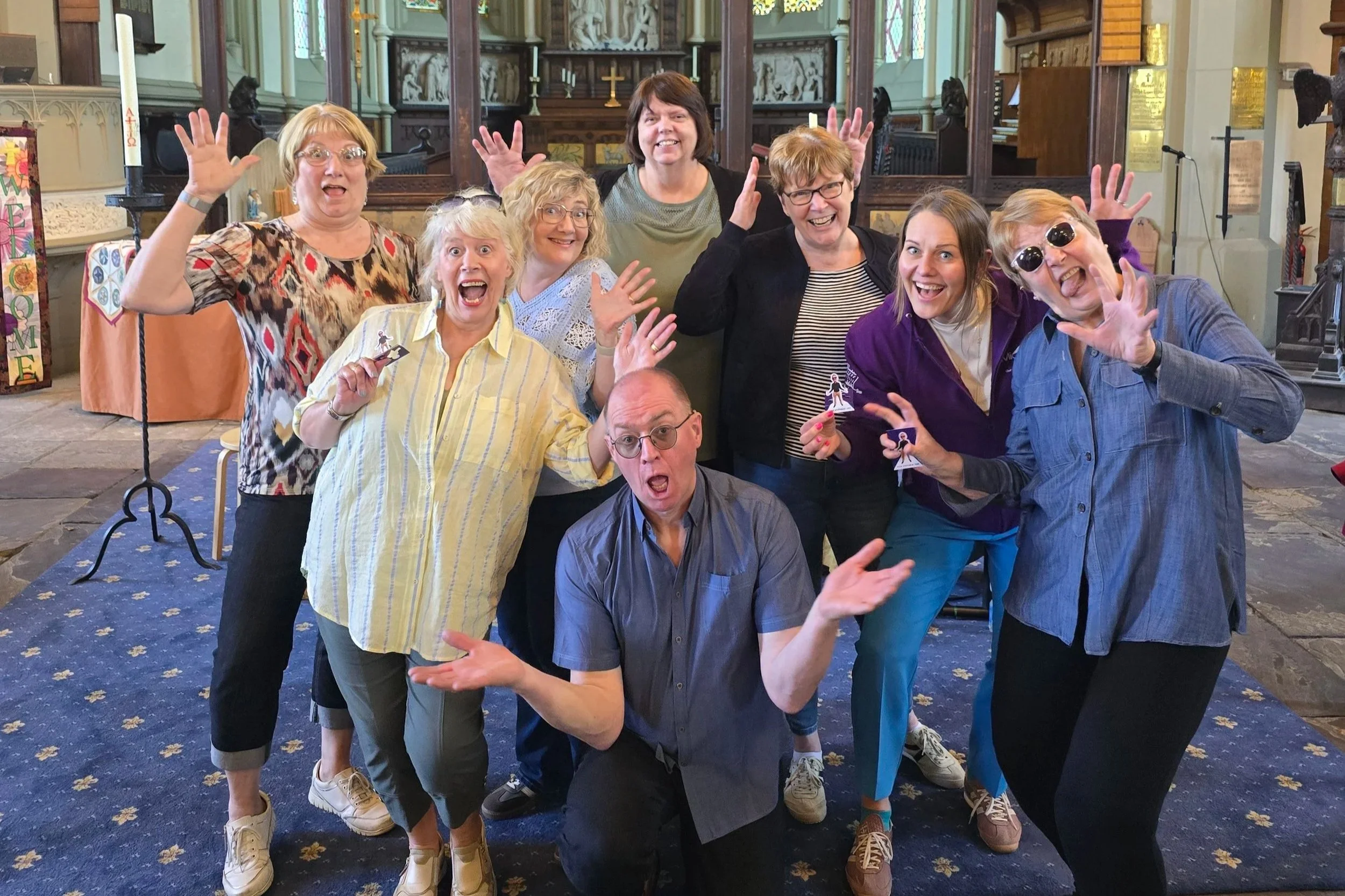
MicWire Members and Paul Whittaker at Stoke Sings